















A weekend in Bath works well without a car: arrive at Bath Spa station and you can walk to the Roman Baths, Georgian crescents and River Avon. The main decision is how much to book. Two days allow time for the city’s history and a thermal spa session, but fitting in every museum would leave little room to enjoy the streets between them.
This itinerary assumes a Friday-evening arrival and a Sunday departure. Saturday follows the Roman Baths and Abbey with the Circus and Royal Crescent; Sunday pairs an optional spa visit with Pulteney Bridge, the Holburne Museum and Sydney Gardens. If you arrive on Saturday, drop your bags before starting and choose fewer paid attractions.
Things to do at a glance
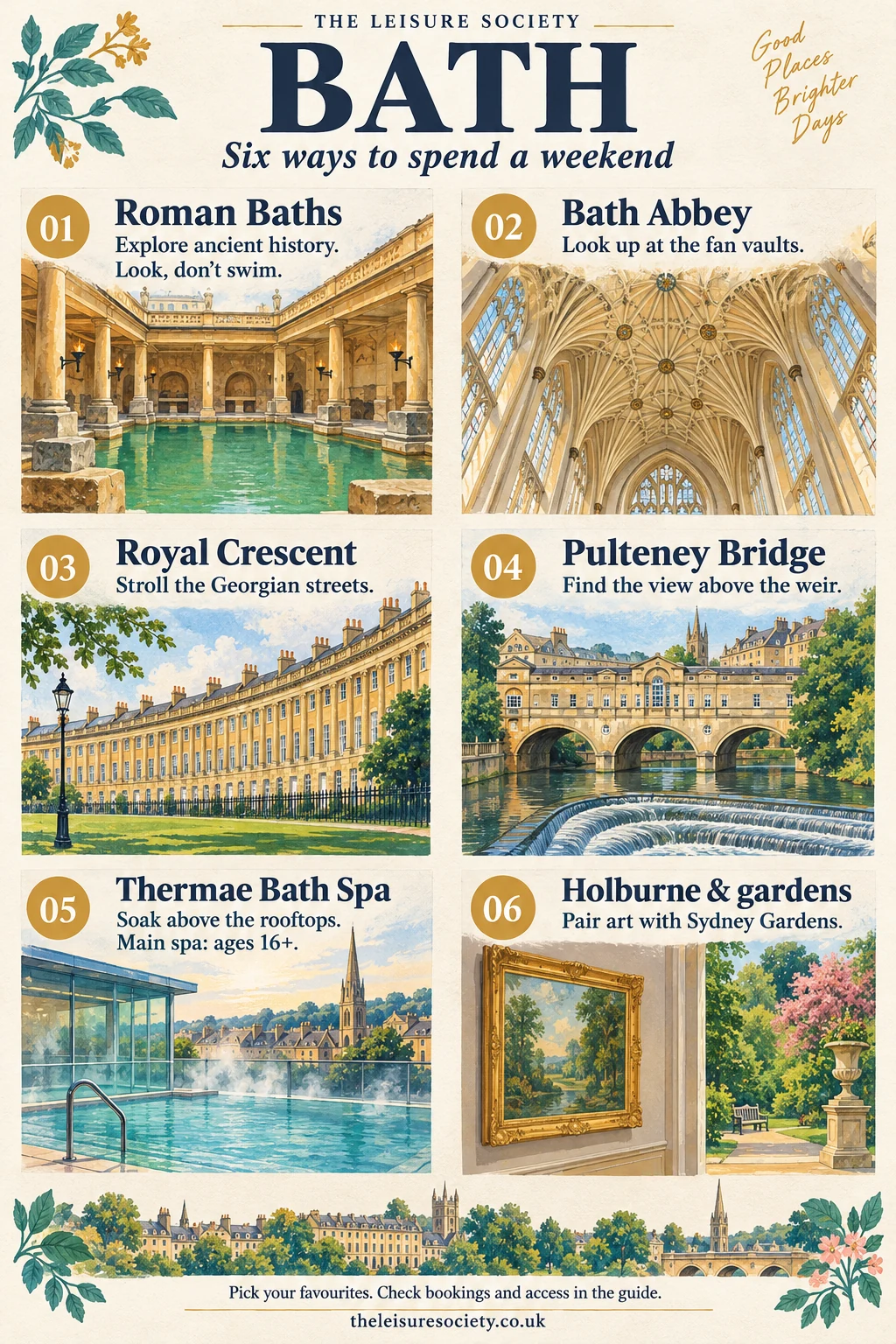
Read the infographic: six things to do
- Roman Baths: explore ancient history; this is not a swimming pool.
- Bath Abbey: look up at the fan-vaulted ceiling.
- Royal Crescent: stroll the Georgian streets.
- Pulteney Bridge: find the riverbank view above the weir.
- Thermae Bath Spa: enjoy a rooftop soak; the main spa is for ages 16 and over.
- Holburne Museum and Sydney Gardens: combine art with a garden stroll.
Getting to Bath and choosing a base
Bath is in Somerset, with its railway station on the southern edge of the centre. GWR services from London Paddington take around 80 minutes, according to Visit Bath’s travel guide. From Bristol Temple Meads, the journey can be as short as 12 minutes. Travellers from elsewhere in the UK should compare connections through Bristol as well as London. Check your actual weekend’s timetable and engineering works before booking accommodation.
Staying between the station, SouthGate and the Abbey keeps arrival and departure simple. Around Queen Square, you are closer to the Georgian part of Saturday’s walk, with some uphill walking involved. Great Pulteney Street is convenient for Sunday’s museum and gardens, but farther from the station. Compare the total room price, cancellation terms, stairs or lift access and luggage-storage arrangements, rather than choosing on postcode alone.
The Roman Baths are a five-to-ten-minute walk from Bath Spa. Leave suitcases at your accommodation first: neither the Roman Baths nor Bath Abbey provides luggage storage. Visit Bath lists storage at an internet café on Manvers Street, opposite the station, alongside other booking services. Confirm opening hours and Sunday collection arrangements before relying on one.
Saturday morning: the Roman Baths and Bath Abbey
Book a morning entry to the Roman Baths and allow 90 minutes to two hours. Starting here gives the rest of Saturday a clear shape, without having to interrupt your walk for a later timed ticket. The Great Bath is the familiar photograph, but the museum explains why the hot spring became a place of worship as well as bathing. Look for the gilt-bronze head of Sulis Minerva, one of the most striking objects surviving from the Roman religious site.

You cannot swim in the Roman Baths. This is an archaeological attraction; modern bathing takes place separately at Thermae Bath Spa. The Roman Baths’ visitor guidance also limits bags to 30 litres and excludes large rucksacks and suitcases. Travel light, even if you are staying only one night.
Bath Abbey is next door, so it makes sense to visit before moving north through the centre. Allow another 30–60 minutes for the church, longer if you want to explore the Discovery Museum included with admission. Look up at the fan-vaulted ceiling and, outside, the angels climbing ladders on the west front. Abbey opening hours can change for services and events; Saturday normally offers a longer visiting window than Sunday.
For lunch, Sally Lunn’s at 4 North Parade Passage is a nearby option serving its buns with sweet or savoury toppings. Ordinary daytime visits are walk-in, so allow for a wait or have another café in mind. A sit-down lunch is worth protecting in the plan: the afternoon is better spent looking at Bath than rushing through it hungry.
Saturday afternoon: the Circus and Royal Crescent
Walk towards Queen Square, then continue to the Circus and along Brock Street to the Royal Crescent. Visit Bath estimates 15–20 minutes from the centre to the crescent, with the Circus about five minutes from it; allow longer for photographs and stops. Keep the official Bath city map handy rather than treating those estimates as a timed walking challenge.
The two Georgian ensembles reward comparison. The Circus, designed by John Wood the Elder, curves around a central green; the Royal Crescent, designed by his son, John Wood the Younger, opens towards a broad lawn. Both can be appreciated from outside without buying a ticket. They provide a different view of the city from the Roman site: Bath as a fashionable place to live and socialise.
If you want to go inside a Georgian house, make No. 1 Royal Crescent your extra paid stop. Allow about an hour for its furnished rooms and account of life upstairs and below stairs. The Jane Austen Centre is another option on Visit Bath’s two-day route, particularly if her connection with the city interests you. Choose one rather than squeezing both into the afternoon. Leave the early evening free and reserve dinner separately if you have a particular restaurant in mind.
Sunday morning: a spa session, or a cheaper start
For a spa weekend, book Thermae Bath Spa before arranging the rest of Sunday. Its two-hour Thermae Welcome session includes the rooftop pool, Minerva Bath and Wellness Suite. A Saturday or Sunday session currently costs £49, with a towel and robe supplied. Bring swimwear and suitable flip-flops or sliders, as set out in the spa’s FAQs, and leave room around the session for arrival and changing.
The main New Royal Bath facilities are for visitors aged 16 and over. Families with younger children, anyone who does not enjoy spas and travellers keeping costs down can instead start with Pulteney Bridge and Sydney Gardens. The Holburne Museum opens at 11am on Sundays, making it a possible late-morning stop on that version of the route.
Sunday afternoon: Pulteney Bridge and the Holburne
After the spa and lunch, walk to Pulteney Bridge. Its shops run along both sides, while the riverbank gives you the view of the bridge above the curved weir. Cross towards Great Pulteney Street and follow the broad Georgian street to the Holburne Museum. The museum estimates a ten-minute walk from the centre, though looking at the bridge will naturally add time.
The Holburne’s admission ticket covers its collection and temporary exhibitions. Standard adult admission is £16.50, with a £2 transaction fee for online bookings; visitors aged 18 and under enter free. You can visit the café and shop without paying for the galleries. Check which exhibition is on before deciding whether this is your second museum or simply a stop beside the gardens.
Sydney Gardens, behind the museum, provides a free outdoor finish, with paths, a children’s play area and the canal nearby. For the journey home, the Holburne estimates about 15 minutes on foot to Bath Spa station. Add time to collect luggage and reach your platform; do not make the final museum room the thing that decides whether you catch your train.
What to budget for the attractions
| Attraction | Adult cost | Booking detail |
|---|---|---|
| Roman Baths | £29 | Advance weekend ticket; £2 more on the day |
| Bath Abbey | £9 | Includes the Discovery Museum |
| Thermae Bath Spa | £49 | Two-hour weekend session |
| Holburne Museum | £16.50 | Plus £2 per online booking transaction |
The Roman Baths and Abbey together cost £38 on that basis, or £87 with the spa. A cheaper version keeps the Roman Baths as the main paid visit and enjoys the Georgian streets, Pulteney Bridge and gardens for free. Check the Roman Baths’ date-specific prices before choosing your weekend.
Adjusting the route for access, rain or one night
This is a walking itinerary, not a verified step-free route. Central Bath has slopes and uneven surfaces. The Roman Baths reports that around 90% of the site is wheelchair-accessible, while No. 1 Royal Crescent has access to selected rooms rather than the whole house. The Holburne has level entry and lift access to every floor. Check each venue against your needs before booking; a taxi between the centre and the upper Georgian streets may make the weekend more manageable.
There is also a current transport wrinkle: Manvers Street roadworks are diverting buses, with the D1 not serving the Holburne Museum stop. The published diversion runs until 30 November 2026. Check First Bus’s current journey planner rather than relying on older museum directions.
If rain makes a long outdoor afternoon unappealing, bring the Holburne forward to Saturday and shorten the Georgian walk. For one night, choose the spa or an additional museum, rather than both. Bath is particularly suited to the idea behind slow travel: spending more time in one place, with enough space between bookings to notice it.
Further Reading