

















The most useful thing to take second-hand jeans shopping is a tape measure. A familiar size on the label can be reassuring, but it will not tell you where the waistband sits, how much room there is through the thigh or whether a previous owner shortened the legs.
Start with a pair you already enjoy wearing. Use its measurements as a reference, inspect the areas that take the most strain and work out the full cost before buying. That approach works in a charity shop, a vintage shop or an online marketplace, without needing to become a denim collector.
Choose the fit before the brand
Decide what job the jeans need to do. Are you replacing an everyday straight pair, looking for a wider leg to wear with boots or trying a higher rise? Search around that shape. A bargain is less useful if it requires a different wardrobe to make it work.
Levi’s SecondHand size guide explains why fit can vary with the cut, fabric and era. Its advice to use actual measurements is especially helpful for vintage pairs. Treat the label as a clue rather than a promise, even when you know the brand.
Also read the fibre label. Rigid cotton denim and denim containing stretch fibres do not feel the same in wear. Comparing a stretchy favourite with a rigid replacement using only the waist measurement can leave you short of room elsewhere.
Make a measurement note on your phone
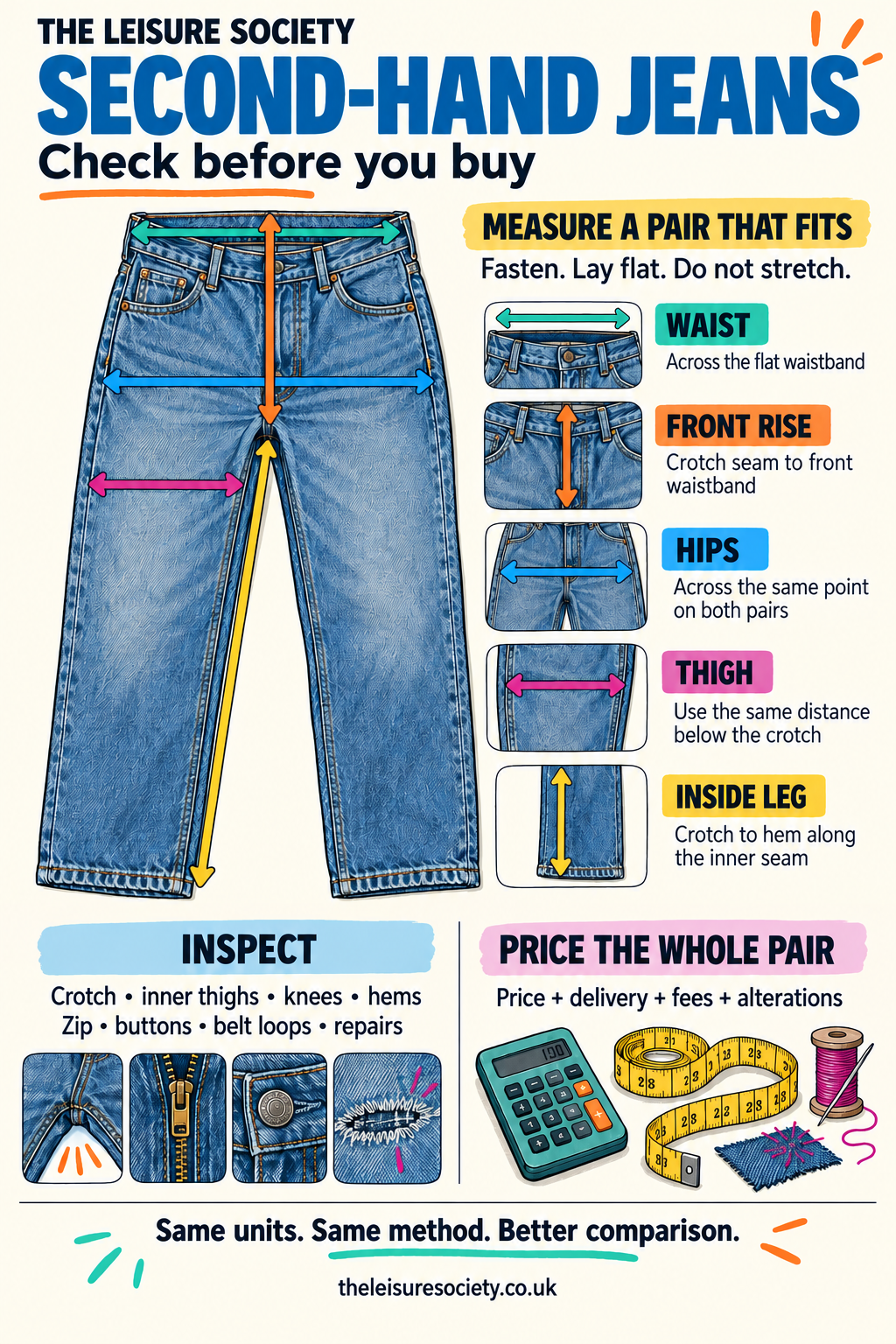
Fasten your reference pair and lay it flat without stretching it. Record how you measured, so a seller can repeat the method. These five checks are more informative together than a waist size alone:
- Waist: measure across the waistband laid flat. State that this is a flat measurement; doubling it gives an approximate circumference, not a substitute for trying the jeans on.
- Front rise: measure from the crotch seam to the top of the front waistband. This helps explain why two pairs with similar waists sit differently.
- Hip width: compare across the same point on both pairs. Ask the seller where their measurement was taken rather than mixing different methods.
- Thigh width: measure at a stated distance below the crotch. Room here can matter as much as the waist when you sit down.
- Inside leg: measure along the inner seam from crotch to hem. Check both legs if an alteration looks uneven.
If you have a strong preference for a narrow or wide hem, add the leg opening. A photo showing the tape on the actual garment can resolve uncertainty faster than a long exchange about whether something is “true to size”. Do not mix inches and centimetres when comparing listings.
“Could you confirm the waist laid flat, front rise and inside leg, measured without stretching? Have the hems or waist been altered, and is there thinning or repair around the crotch?”
Inspect the places a listing photograph can miss
Look closely at the crotch, inner thighs, seat, knees, pocket corners and back hems. Ask for clear photographs of the inside as well as the outside where there is a repair. A neatly faded pair and a pair worn almost through can look surprisingly similar in a distant photograph.
Check that the zip runs, buttons fasten and belt loops remain securely attached. Inspect the waistband for puckering, loose stitching or an obvious change in shape. If the legs have been shortened, decide whether the remaining length works with the shoes you intend to wear.
Repairs are not automatically a reason to walk away. The question is whether you like their appearance, whether the surrounding cloth looks sound and whether further work is likely. For a pair needing substantial attention, ask a repairer for an assessment before committing.
Try sitting down, not just standing in the mirror
In a shop, try the jeans with a similar layer and footwear to those you will normally wear. Sit, bend your knees and put your hands in the pockets. A waistband that only feels comfortable while you stand perfectly still is unlikely to become your favourite.
Check the back rise as well as the front, and look at where the seams fall. If you are considering a wider cut, assess the whole silhouette rather than buying a larger size in a shape you already dislike. A belt can adjust some looseness, but it does not change the rise or the amount of fabric through the seat.
Online, avoid buying a too-small pair on the assumption it will stretch enough. The condition, fabric and previous wear all introduce uncertainty. Choose measurements you can live with now.
Price the jeans you will end up wearing
Add delivery, platform charges and any necessary alteration or repair to the asking price. For example, a hypothetical £25 pair with £4 delivery and a £15 alteration costs £44 before any other charges. Those are budgeting figures, not a quote for tailoring; obtain a local price for the actual work.
Check brand repair options too. Nudie Jeans says it repairs its own jeans free at its Repair Shops and Repair Partners, regardless of where they were bought. Its stated requirements include bringing them freshly washed, and turnaround varies. Confirm the arrangements with the location you intend to use; this is not a repair promise for other brands.
Read the returns terms before paying
Know whether the seller is a business or a private individual. Your rights differ, and a marketplace’s protection scheme is not the same thing as a shop’s returns policy. Citizens Advice’s online marketplace guide explains the distinction.
Save the listing, measurements and messages. Check the process for reporting an item that differs from its description, as well as any change-of-mind terms. An accurate listing can still describe jeans that do not suit you, so do the fit work before checkout.
The right pair does not have to be rare, perfectly pristine or a celebrated vintage model. It needs to fit comfortably, be in a condition you understand and cost an amount you are happy to pay for regular wear.