











The best time to explore Paris depends on what you want from each stop. Fewer people in your photographs, softer evening light and comfortable walking weather do not always come together.
When planning your city break in Paris, start with the experiences that matter most. Save an early morning for a neighbourhood walk, arrange museum visits around their opening hours, and leave room for an evening beside the Seine. The aim is not to find an empty city, but to enjoy its landmarks without rushing between them.

Early mornings: explore before the day gets busy
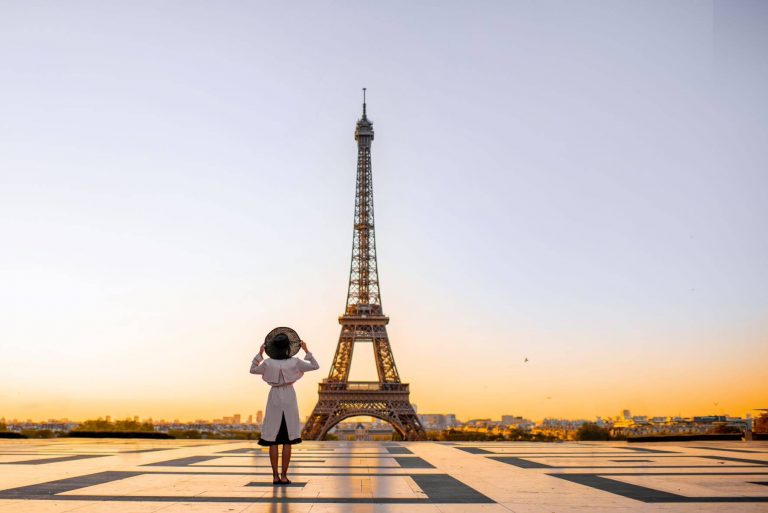
For photographs of the Eiffel Tower, consider heading to its surroundings around 7.30am, with Trocadéro offering views across to the monument. An early start gives you a better chance of finding space for your photographs, rather than guaranteeing a crowd-free scene.
Treat that time as a starting point, not a year-round rule: check sunrise for your travel dates and adjust it to the light you want. This is a suggestion for seeing the tower from outside, not for entering the attraction.
Early morning also suits a walk through Montmartre, particularly the streets around Sacré-Cœur. Aim to explore before 9am, then make time for a coffee and croissant rather than immediately moving on to the next landmark.
For the Louvre, book an early timed entry in advance. The museum’s published opening time is 9am, and it is closed on Tuesdays. Choosing a slot gives your day some structure, but should not be treated as a promise of empty galleries.
Late afternoons and evenings: plan around the light
For a different view of the city, set aside time along the Seine towards the end of the day. Pont Alexandre III is a good choice around an hour before sunset, when clear conditions can bring warmer light to the bridge’s ornate details.
Check the sunset time rather than choosing the same clock time in every season. This recommendation is about photography and atmosphere—not necessarily avoiding other visitors.
Around Notre-Dame, an evening walk offers the chance to admire the cathedral’s exterior before continuing towards the streets of Île Saint-Louis. Keep this separate from plans to visit inside the cathedral, which depend on its admission arrangements.
The Eiffel Tower’s sparkling display lasts five minutes at the start of each hour after nightfall, once its evening lighting is on. Check the official lighting schedule before planning a late visit, as the final display depends on the operating timetable. Arriving a few minutes before the hour gives you time to choose a viewing spot.
An evening need not be spent entirely outdoors. The Louvre currently stays open until 9pm on Wednesdays and Fridays, providing an alternative to an early start. Its last admission is one hour before closing, with galleries beginning to clear 30 minutes before closing.

Spring and autumn: leave time for the gardens
April and May, followed by September and October, are useful months to consider for a walking-focused visit. Spring and autumn generally offer milder conditions than the height of summer, although neither season guarantees dry weather. Paris receives rainfall throughout the year, so keep some flexibility in your plans.
In spring, make time for the Jardin du Luxembourg and its flowerbeds. Rather than treating it simply as a route between attractions, allow yourself a proper break there.
Check the garden’s gates before arranging an early or late visit. Its official opening and closing times change fortnightly, following the seasons.
For autumn colour, include the Tuileries Garden in your plans. Its published September and October opening hours are 7am to 9pm, although visitors are asked to leave 30 minutes before closing.
A weekday morning is worth considering when you have a choice, but do not equate spring or autumn with an uncrowded city. Check school holidays and events for your dates, and keep the attractions you most want to visit firmly in the diary.
Summer and winter: change the pace, not just the itinerary
Summer’s long evenings give you more room to spread out your sightseeing. On hot days, put exposed outdoor stops such as the area around the Arc de Triomphe earlier in the day, and consider a museum visit or a longer break during the afternoon. Check the forecast before committing to a full day of walking.
That is a strategy for managing the heat, not a guarantee of shorter museum queues. Book any timed admission you need before building the rest of the day around it.
In winter, shorter days make evening lights an earlier part of the itinerary. December adds festive decorations, while January and February are worth considering for a museum-focused break outside holiday periods.
Still reserve popular attractions rather than assuming a winter visit will be quiet. For outdoor plans, check garden closing times carefully: Luxembourg Garden closes at 4.30pm in December, much earlier than in summer.
Whatever the season, leave some time unallocated. One well-timed museum visit and an unhurried neighbourhood walk can be a more satisfying day than an itinerary with no room to stop.
Further Reading